Article: Sapphires: Beyond Blue
Sapphires: Beyond Blue
What makes a sapphire?

A sapphire is a variety of the mineral corundum. The obvious follow-up: what is corundum? Corundum is primarily composed of aluminium oxide and is one of the hardest natural crystals on Earth—so tough it was even used to fashion axes in ancient China. In short: these gems are built to last, making them a brilliant choice for engagement rings and everyday wear.
Where do sapphires come from?

Sapphire deposits are found all over the world—on every continent… well, almost (sorry, Antarctica). Today, major sources include Madagascar, Australia, Sri Lanka, and Montana. While modern-mined sapphires continue to surprise and delight jewellery lovers and gemologists alike, some of the rarest and most coveted stones hail from the historic mines of Kashmir, which have been closed for over a century.
The word ‘sapphire’ comes from the Hebrew root sappir, meaning ‘the most beautiful thing.’ And honestly, it’s hard to argue with that. Humanity’s fascination with sapphires stretches back to antiquity: in ancient Persia, it was believed the sky was blue because the world rested on a giant sapphire; in Jewish oral tradition, the Ten Commandments were said to have been inscribed on sapphire tablets. We’ve been obsessed with these gems for a very long time.
What is the natural colour of a sapphire?

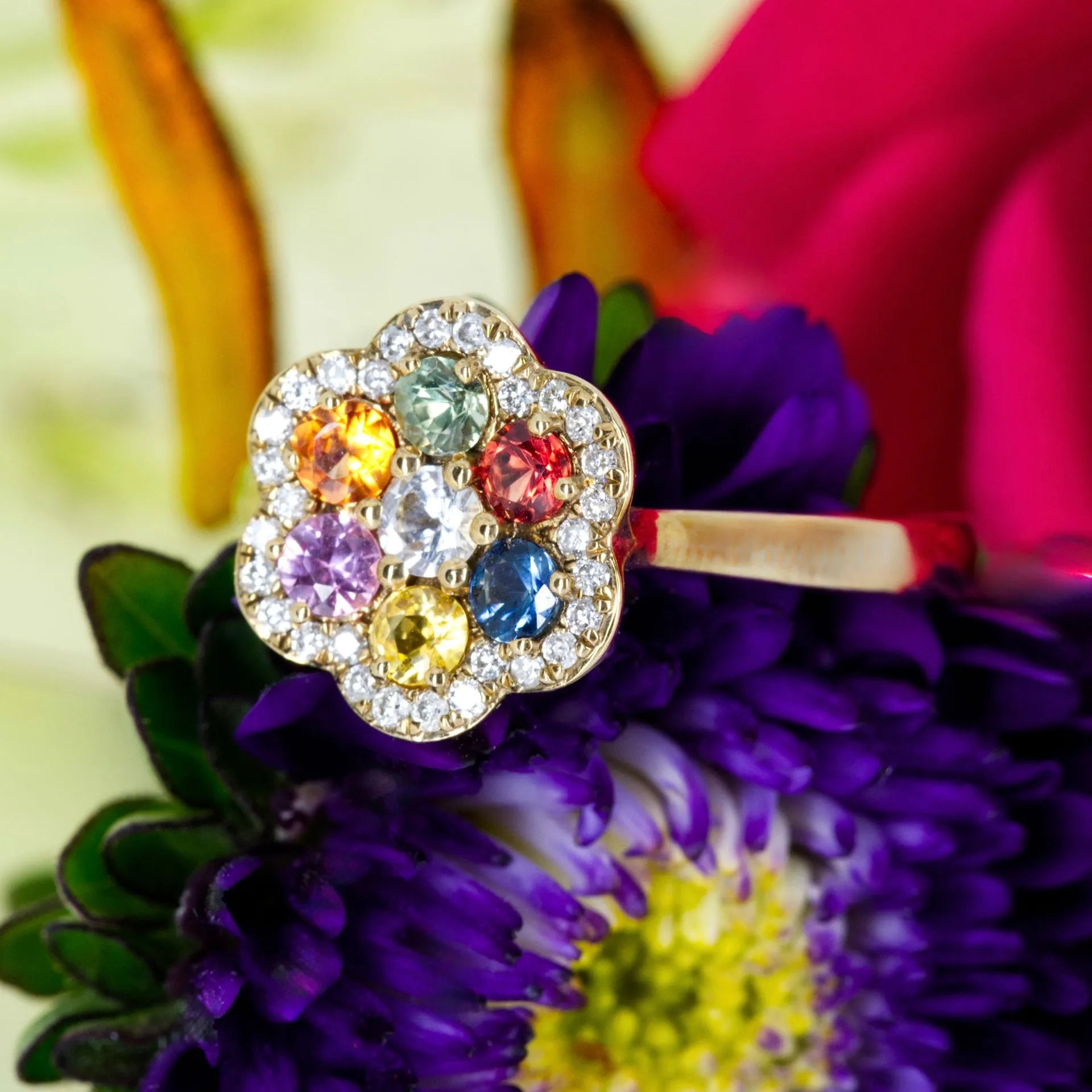
Sapphires occur naturally in a dazzling range of colours. Pure corundum, however, is colourless. The vibrant hues these stones are known for appear thanks to trace elements slipping into the crystal structure. There’s an remarkable amount of chemical diversity that can contribute to a sapphire’s colour, but the main contributors are titanium, iron, and chromium.
How do different sapphires get their colour?
Blue Sapphires

That classic sapphire blue comes from a combination of titanium and iron working together within the crystal structure. Higher concentrations of titanium and iron result in a deeper shades. As a general rule, the darker the blue the more valuable the stone.
Pink Sapphires

Pink sapphires get their blush from chromium. Add too much chromium and you’ve got a ruby—but in smaller amounts, chromium creates a soft, romantic pink.
Purple Sapphires

These stunning stones owe their violet tones to a mix of chromium, titanium, and iron—or sometimes chromium and vanadium. It’s a chemical collaboration that pays off in a rich, entrancing colour.
Yellow Sapphires

Yellow sapphires form when iron binds to the crystal structure and absorbs blue light, leaving behind warm golden tones. It like carrying a bit of sunshine on your hand.
Green Sapphires

Also thanks to iron—just more of it. Green sapphires offer an earthy, elegant alternative to emeralds, with the added bonus of greater durability.
Padparadscha Sapphire

One of the most sought-after gems in the world, the padparadscha sapphire strikes a perfect balance of iron and chromium. The result? A mesmerising pink-orange glow that feels almost unreal.
The moral of the story

Sapphires are extraordinary. Their incredible range of colours reflects the full spectrum of Earth’s beauty—and then some. We absolutely love these stones and think you will too!